
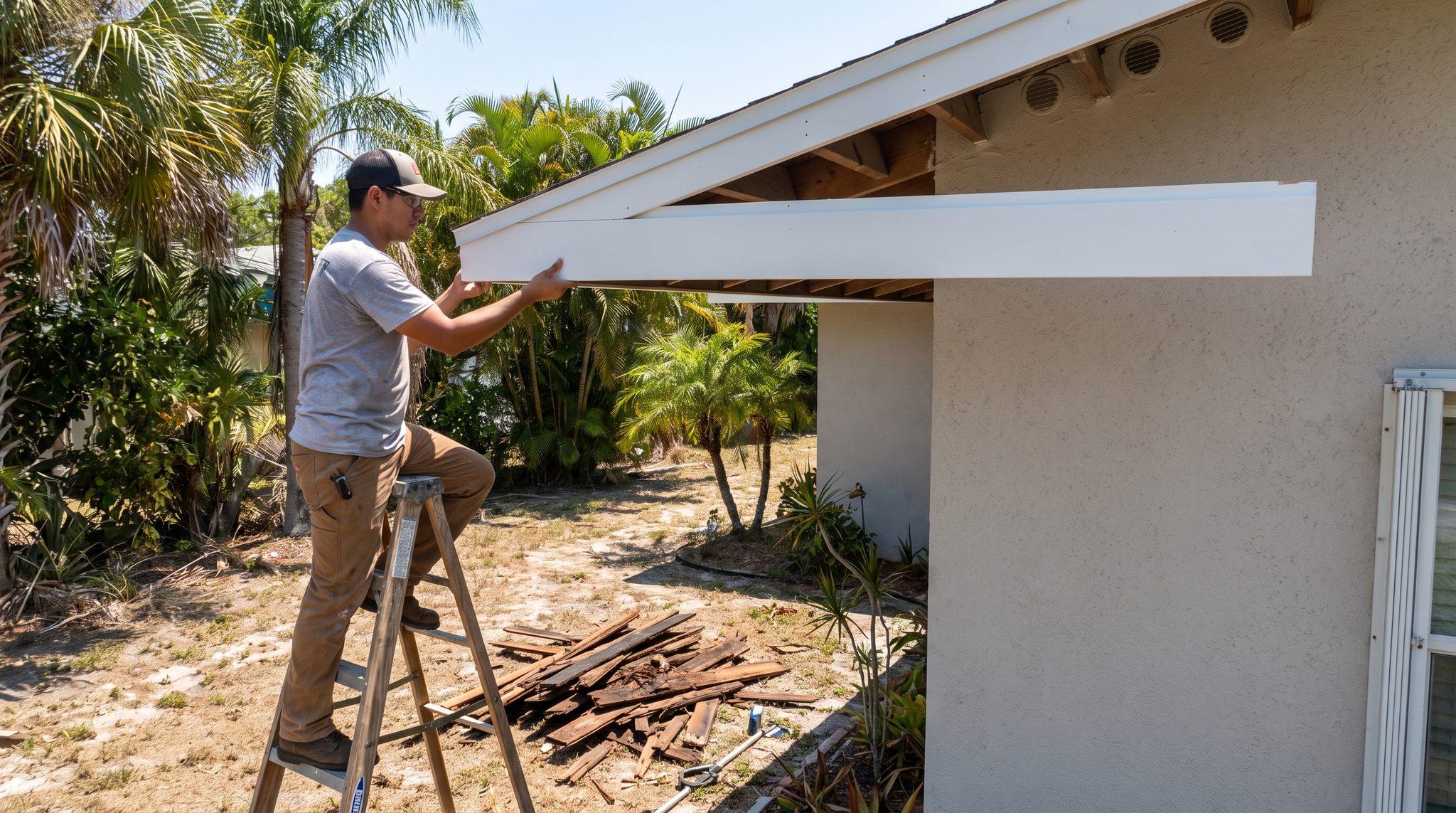
Fascia repair is edge work, and the roof edge is where hurricanes start taking roofs apart. The fascia carries your gutters, closes the eave, and gives the drip edge and the first course of roofing something solid to fasten into. When it goes soft, the whole perimeter detail loses its anchor — long before anyone notices peeling paint.
Why fascia rots in South Florida
Three things do it: gutters that overflow and dump water down the board, roof edges where the drip edge was omitted or set short so runoff wicks behind the fascia, and constant humidity that keeps end grain damp between rain events. Salt air near the coast speeds up every part of that.
Wood fascia usually fails from the back first, which is why it can look fine from the driveway and crumble the moment a ladder hook touches it. If your gutter has started to sag or pull away, that is normally the fascia behind it giving up rather than the gutter hardware.
Repairing the edge properly
We remove the affected fascia and inspect what is behind it: the sub-fascia, the rafter or truss tails, and the edge of the deck. Rot rarely stops at the visible board, and covering compromised rafter tails with new fascia is a cosmetic fix that fails in two seasons.
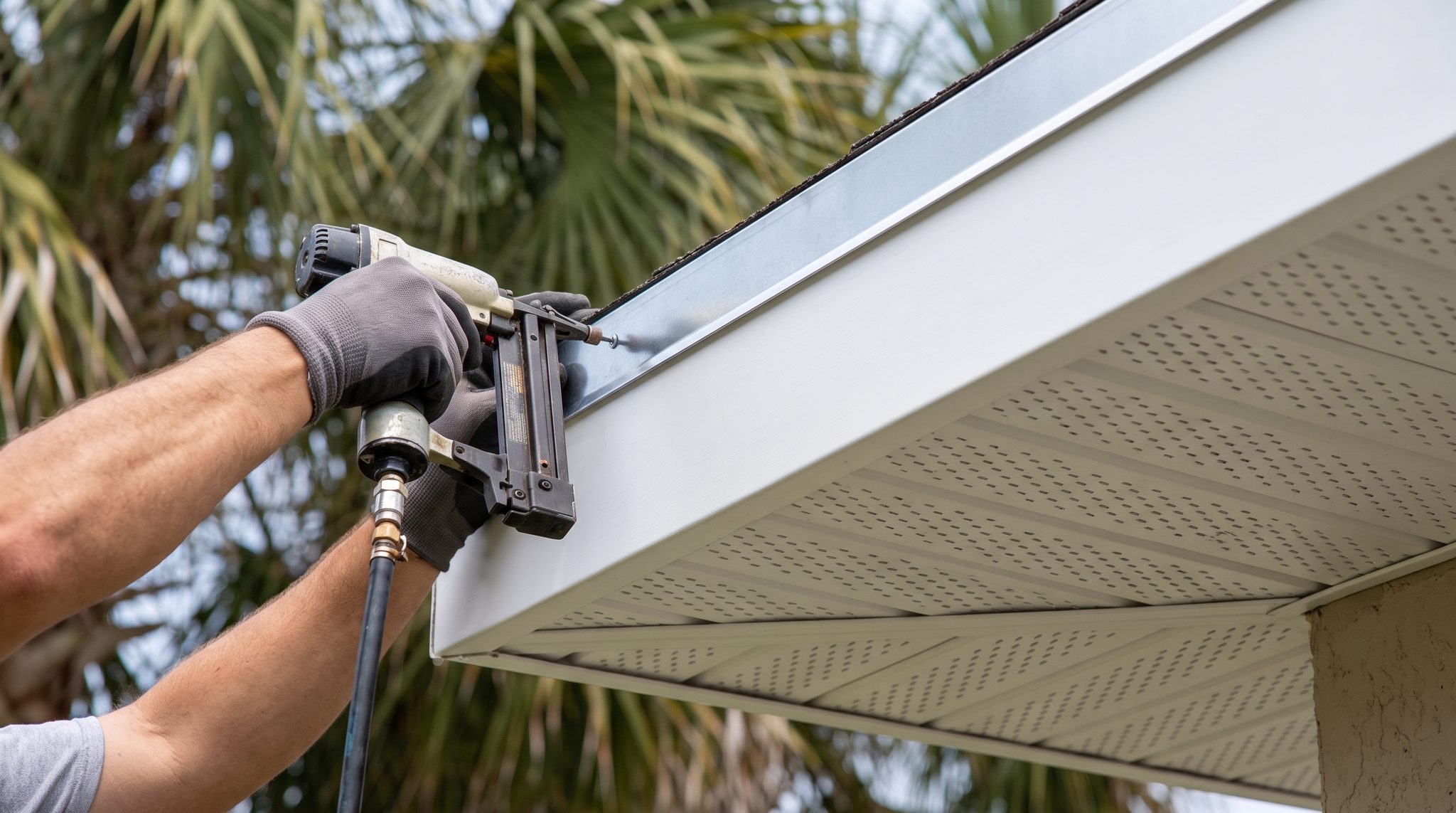
Damaged rafter tails get sistered or replaced, sub-fascia is renewed where needed, and new fascia goes on fastened into solid framing. We then reset the drip edge so it laps correctly over the fascia and discharges into the gutter, which is the detail that stops the whole cycle repeating.
Material choices for the coast
Pressure-treated and primed wood remains common and works well when it is properly sealed on all six sides before installation — including the cuts made on site, which is the step most often skipped. Aluminum-wrapped fascia sheds water and paint maintenance but hides what is happening behind it, so it needs sound wood underneath first.
PVC and composite fascia will not rot at all, holds paint well, and is worth the premium on shaded north elevations and coastal exposures where wood struggles. We will walk the elevations with you and recommend per-side rather than pushing one material around the whole house.
Fascia, soffit and the wind path
The eave is a pressure zone. In a hurricane, wind driven up under an unsecured soffit and eave finds its way into the attic and pushes the roof from below — a documented failure mode across South Florida. Fascia that no longer holds a fastener means the soffit and the roof edge have nothing to anchor to.
That is why fascia work is best done alongside roofing rather than as an isolated carpentry job. If a shingle re-roof or tile re-roof is in your near future, doing the edge at the same time means the drip edge, underlayment and starter course all land on new material.