
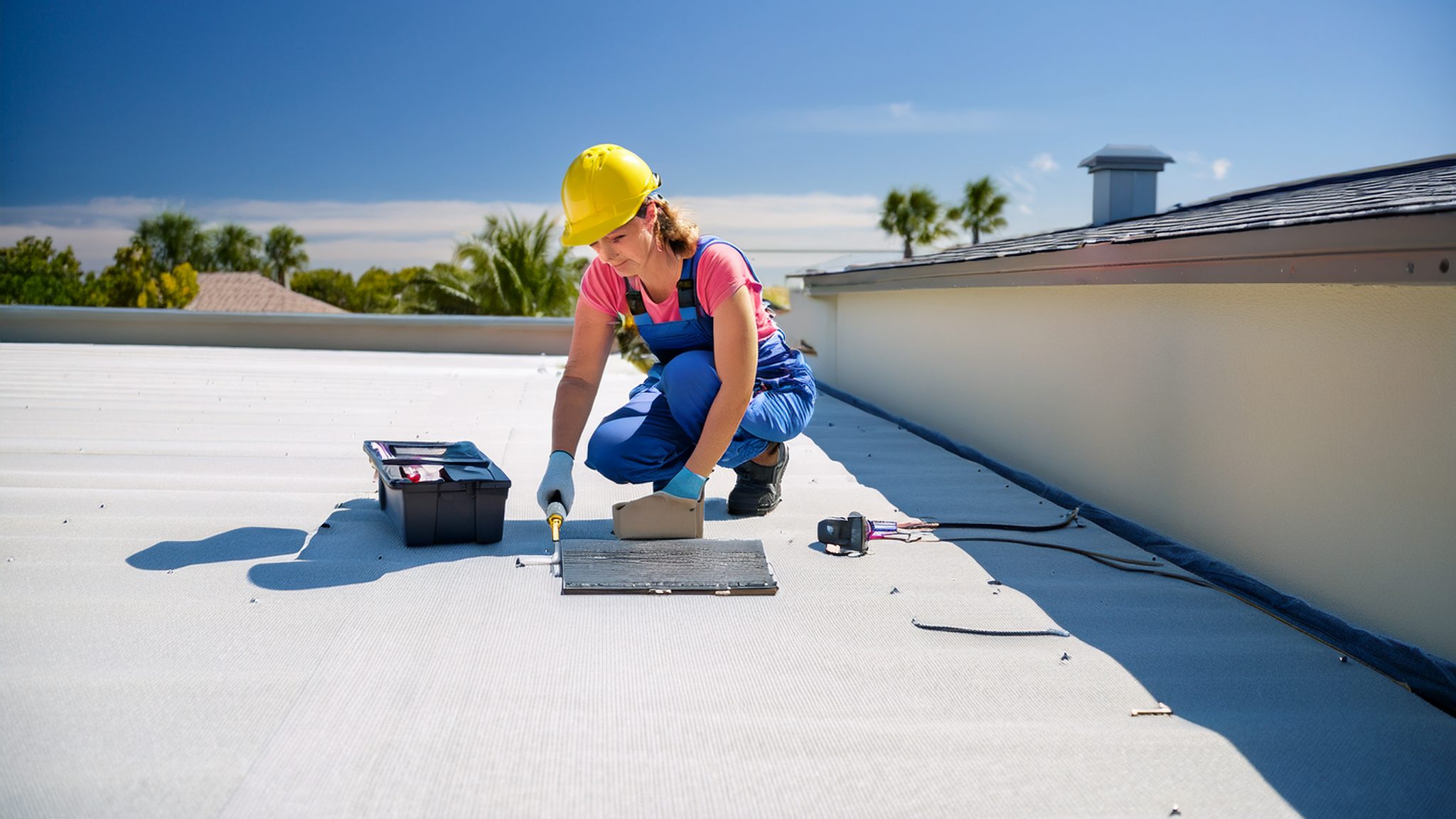
Flat roof repair is a game of seams, terminations and drainage. Low-slope roofs across South Florida — flat tile-house additions, Florida rooms, small commercial decks — almost never fail in the middle of the field. They fail where two pieces of membrane meet, where the membrane turns up a wall, or where water sits because it has nowhere to go.
Finding the failure on a low-slope roof
We survey the whole surface rather than the area above the stain, because water on a flat roof travels laterally under the membrane and can surface metres from where it entered. Seams get probed, terminations and counterflashing get checked, and drains and scuppers get tested for actual flow.
Ponding is the diagnostic that matters most down here. Standing water 48 hours after rain means slope or drainage is inadequate, and any repair that ignores that will fail again in the same spot. Sometimes the fix is clearing and reworking a drain; sometimes it is adding tapered insulation to create fall.
Repairs by system: TPO, modified bitumen and built-up
TPO and other single-ply membranes repair by heat-welding new material over the failure, which produces a monolithic bond rather than a glued lap. The weld has to be probed after it cools; a weld that looks right and is not fully fused is the most common single-ply repair failure.
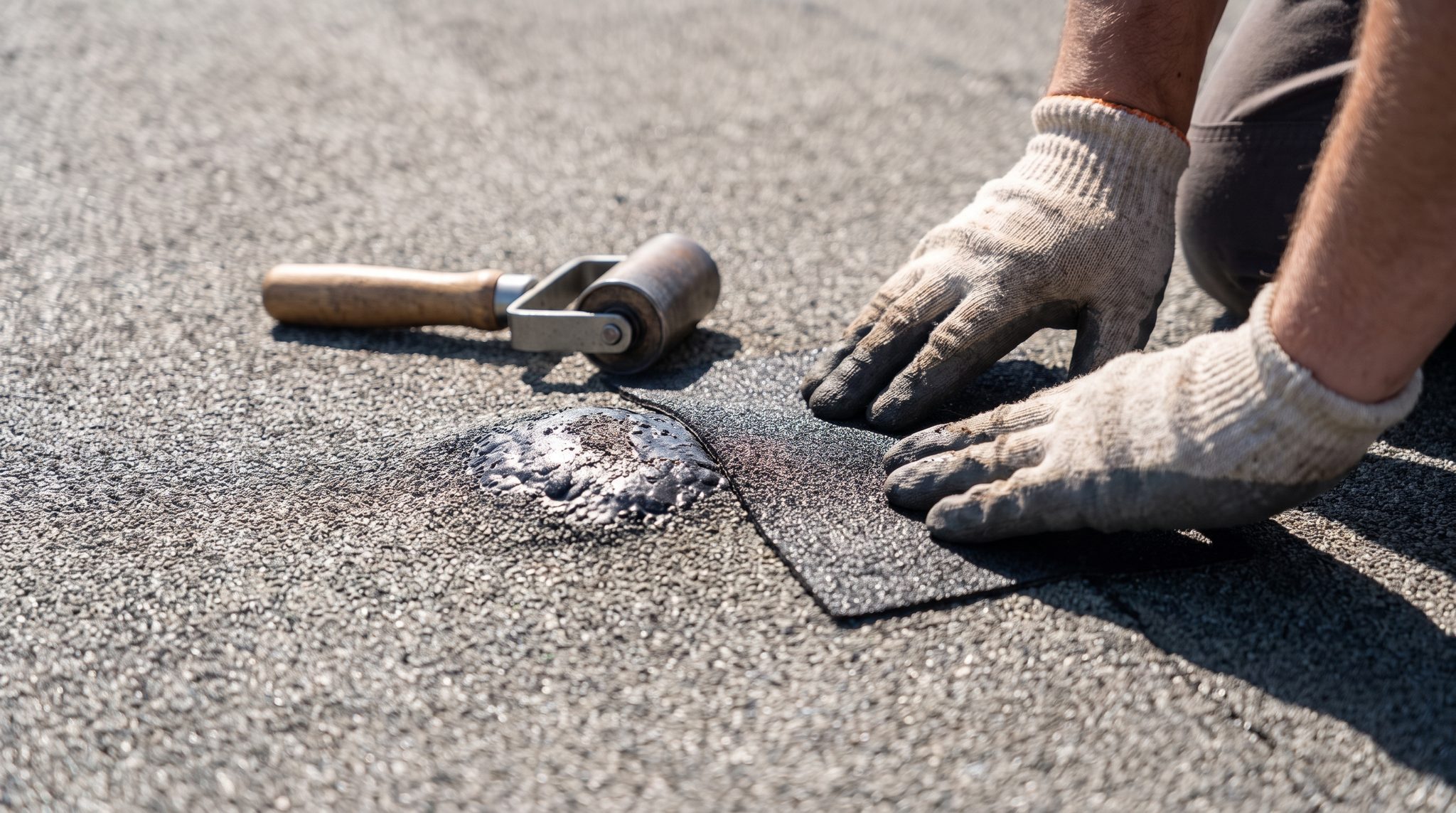
Modified bitumen is torch- or cold-applied depending on what is below and what the building can safely accept. On occupied buildings we lean toward cold-applied and self-adhered systems. Older built-up gravel roofs get the gravel spudded back, the failed plies cut out and new plies set in before the surfacing is restored.
Details that fail first in this climate
Pitch pans, tie-ins to A/C curbs, and the base flashing where a flat deck meets a tile-roofed wall are the three details we most often find at fault. Constant thermal cycling — a roof surface that swings sixty degrees in a day — works those joints loose season after season.
Salt air accelerates corrosion on metal edge and counterflashing, particularly east of the Intracoastal. Where the metal itself has gone, sealing the joint is a temporary measure; the metal needs replacing before new membrane is terminated into it.
Repair, recoat, or replace
If the membrane is sound and the failures are localized, repair is the right spend. If the surface is chalked and crazed across the whole roof but the substrate is dry, a fluid-applied flat roof coating renews the surface and adds reflectivity without a tear-off.
If moisture surveys show saturated insulation, neither repair nor coating is honest — trapped water keeps working on the deck. That is when a flat re-roof or a hot mop built-up system is the correct recommendation, and we will show you the evidence behind it.