
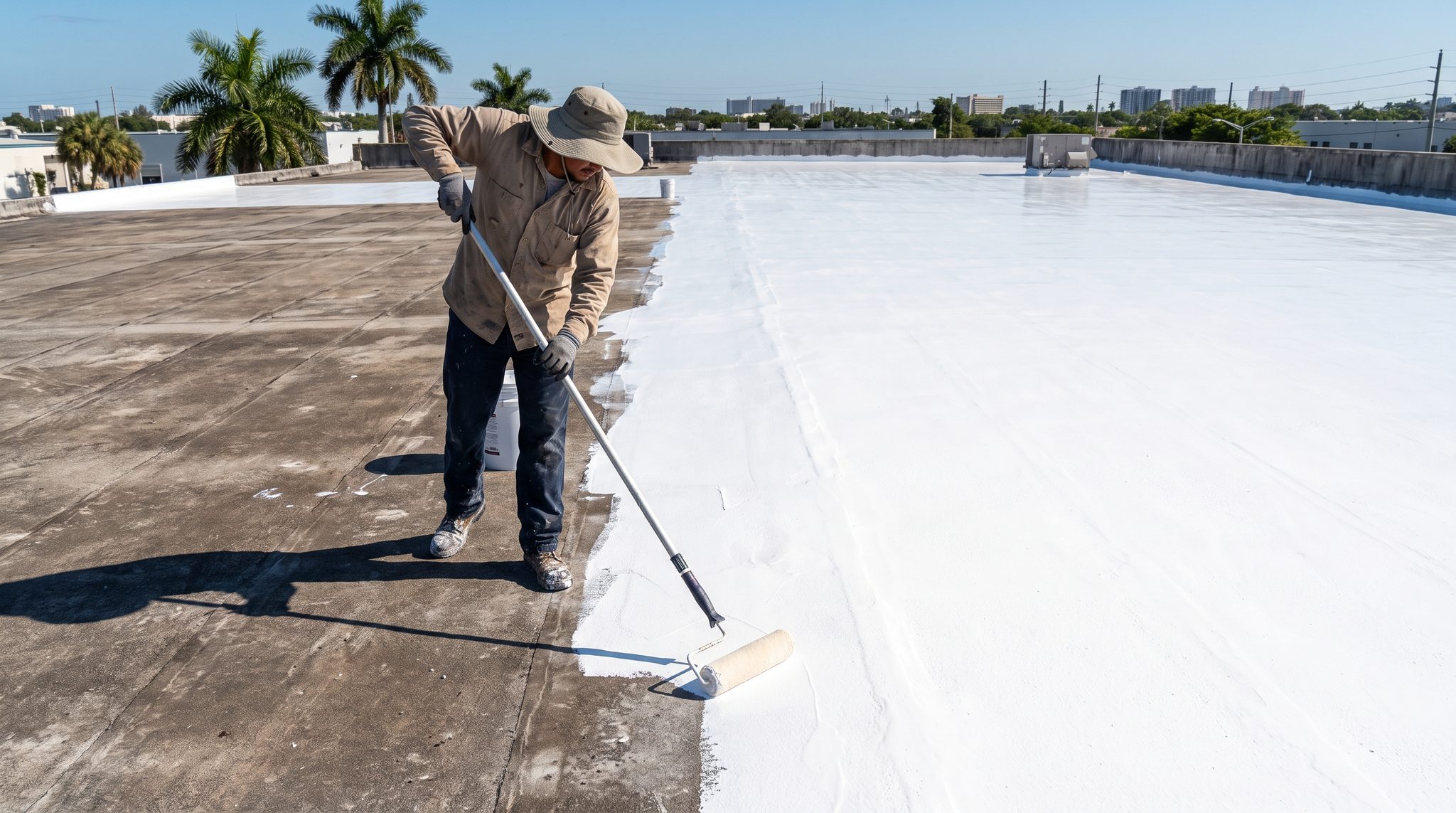
A flat roof coating is a fluid-applied membrane rolled or sprayed over an existing low-slope roof. Done on the right roof at the right time, it seals aging seams, reflects a serious amount of South Florida sun back off the building, and extends service life without a tear-off. Done on a wet roof, it traps the problem underneath. The prep work is the job.
When a coating is the right call
Coatings suit roofs that are aging rather than failing: a mod-bit or TPO surface that has chalked, crazed and lost reflectivity, with dry insulation below and drainage that works. On those roofs a coating buys real years and drops surface temperature substantially, which shows up on the cooling bill of any building with rooftop A/C.
Coatings do not suit saturated roofs. Before we quote one we check for trapped moisture and probe suspect areas. If the insulation is wet, coating over it is a way of paying to hide a deck problem that keeps growing.
Silicone, acrylic and the South Florida climate
Silicone handles ponding better than anything else in the category, which matters on the older low-slope decks around here that never had much fall built in. It stays flexible, resists UV well and does not soften when water sits on it.
Acrylics are cost-effective and highly reflective and work well on roofs with genuinely positive drainage, but they are water-based and need a clear cure window — not always easy to find in a South Florida summer afternoon. We pick the chemistry around your roof's drainage and the season we are working in, not around what is cheapest to buy.
Preparation is most of the work
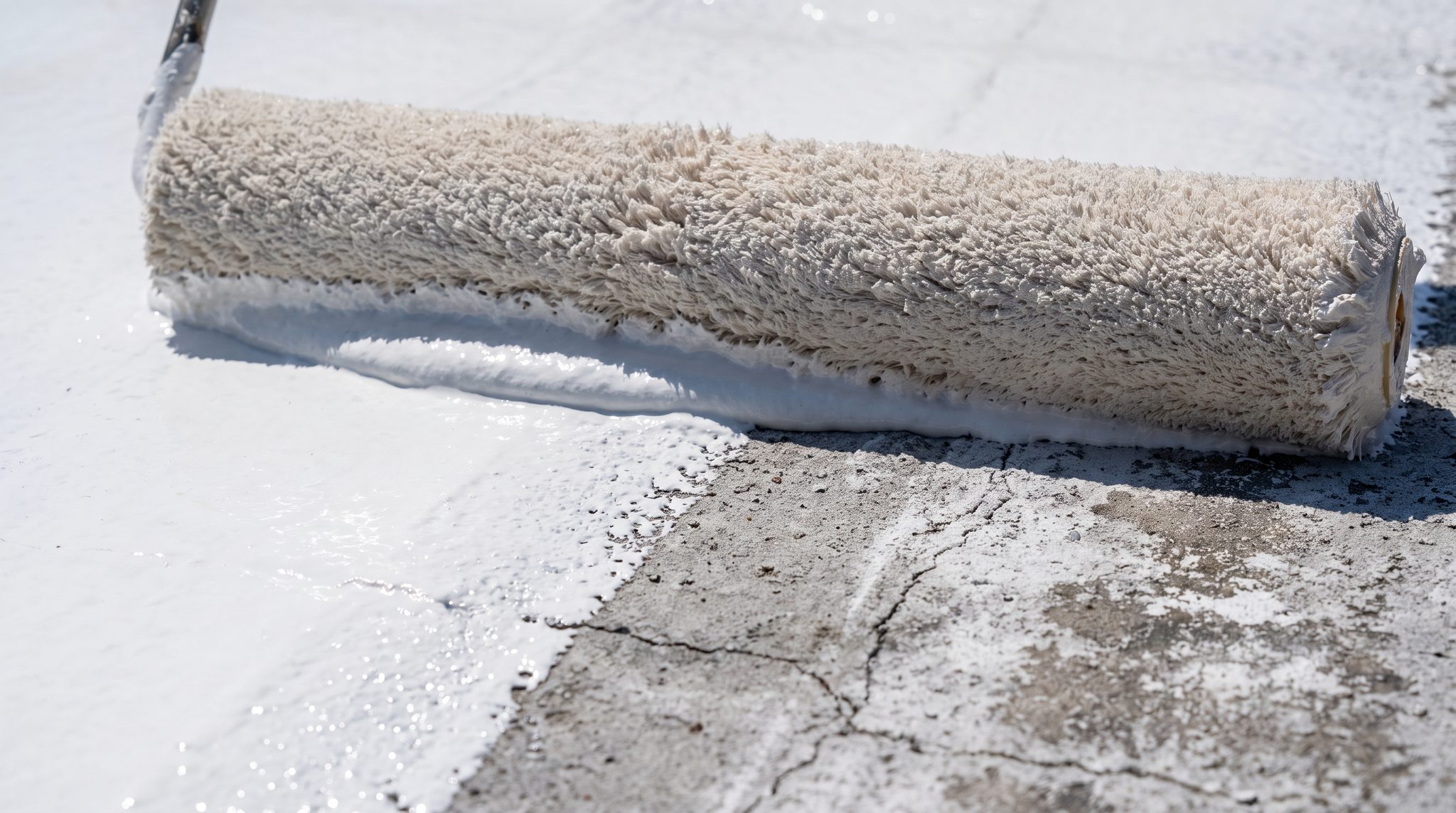
The roof gets cleaned — power washed or chemically cleaned depending on the substrate — and given time to dry fully. Any open seam, split or blister gets cut out and repaired properly first, and reinforcing fabric goes into the coating at seams, penetrations and wall transitions where movement concentrates.
Primer selection depends on the existing surface, and coating thickness is specified in mils, verified as we go. A coating applied thin looks identical on day one and fails years early. If you have open failures we handle those as flat roof repair before the coating stage begins.
What a coating does and does not change
It gives you a seamless, reflective surface with no fasteners through the field, and it can be recoated later without a tear-off — that is the long-term value. It also keeps the existing roof out of the landfill.
It does not add slope, it does not fix a wet roof, and it is not a structural upgrade. If the assembly under it has reached the end of its life, a flat re-roof or a hot mop built-up system is the correct solution and we would rather tell you that than sell you a coating that fails.