
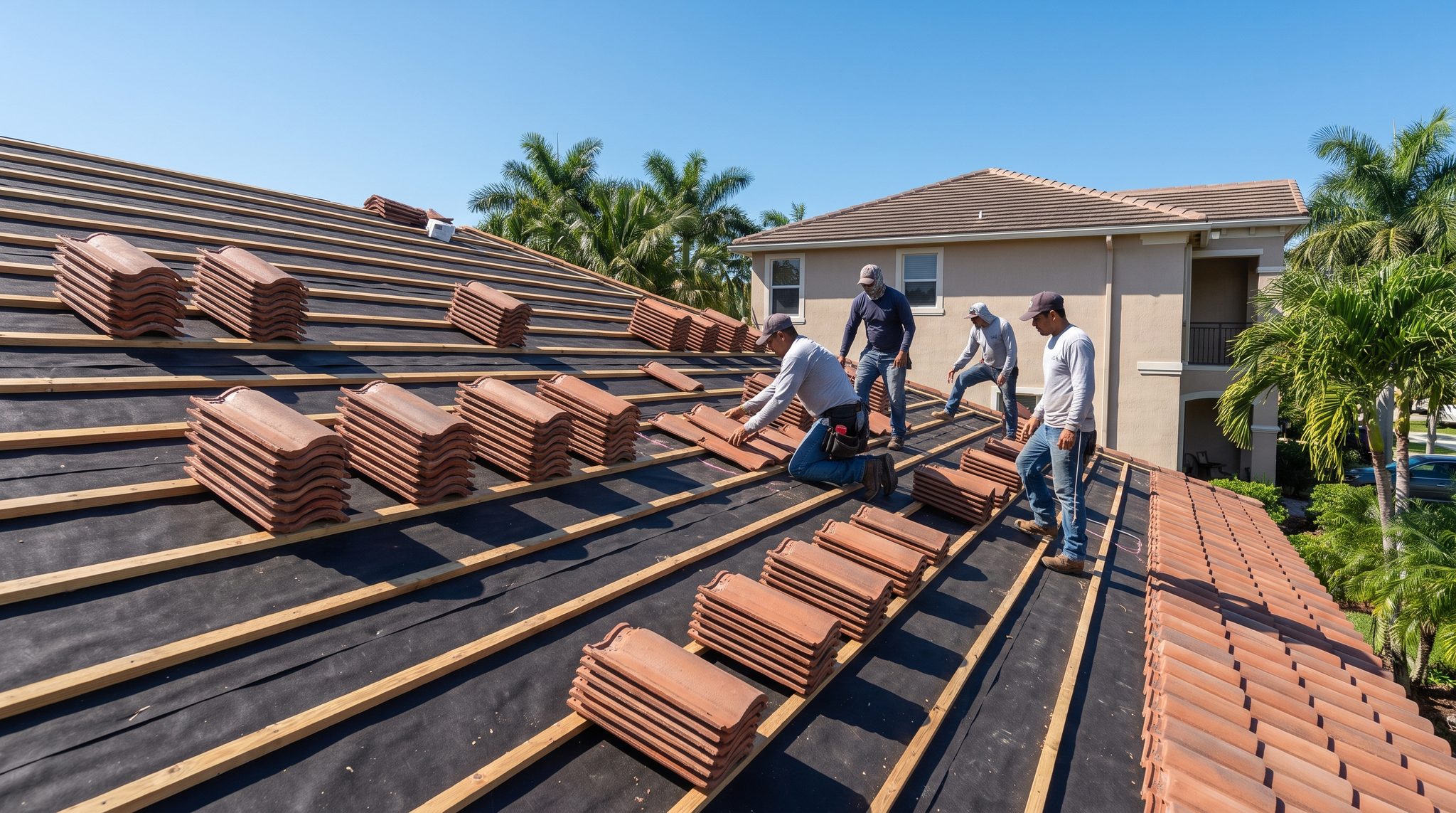
A tile re-roof replaces the waterproofing under a roof whose tile is often still perfectly good. On concrete and clay roofs the tile is armour; the membrane below it is what keeps the house dry, and it wears out decades sooner. So the job is a careful removal, a full underlayment replacement, and a re-set — with the tile either salvaged and relaid or replaced entirely.
Salvage and re-lay, or all-new tile
The first decision is whether your existing tile survives removal. Concrete barrel and flat tile in sound condition can often be stacked, stored on site and relaid, which keeps the exact colour blend and profile the house was built with. Expect breakage — a working allowance of roughly one in ten is normal, higher on brittle older clay — so an available matching profile matters even on a salvage job.
All-new tile makes sense when the field is widely spalled, when the profile is discontinued and no salvage exists, or when the homeowner wants a different look. If only a limited area is failing, roof tile replacement or targeted tile roof repair is a smaller and more appropriate scope.
Tear-off on a tile roof is a different job
Tile is heavy and it is set into mortar, foam or fasteners, so removal is slower and more physical than stripping shingles, and it produces far more debris weight. Batten strips, old mortar beds and hardened foam all have to come off the deck as well — leaving them behind is how you end up with a lumpy field and a membrane that never lies flat.
The deck underneath is inspected and re-nailed to the current schedule, the same as any other re-roof, and damaged sheathing is replaced. Tile decks in this region are usually plywood over trusses, but older Miami-Dade housing stock sometimes has tongue-and-groove or a poured deck, each of which changes the attachment approach.
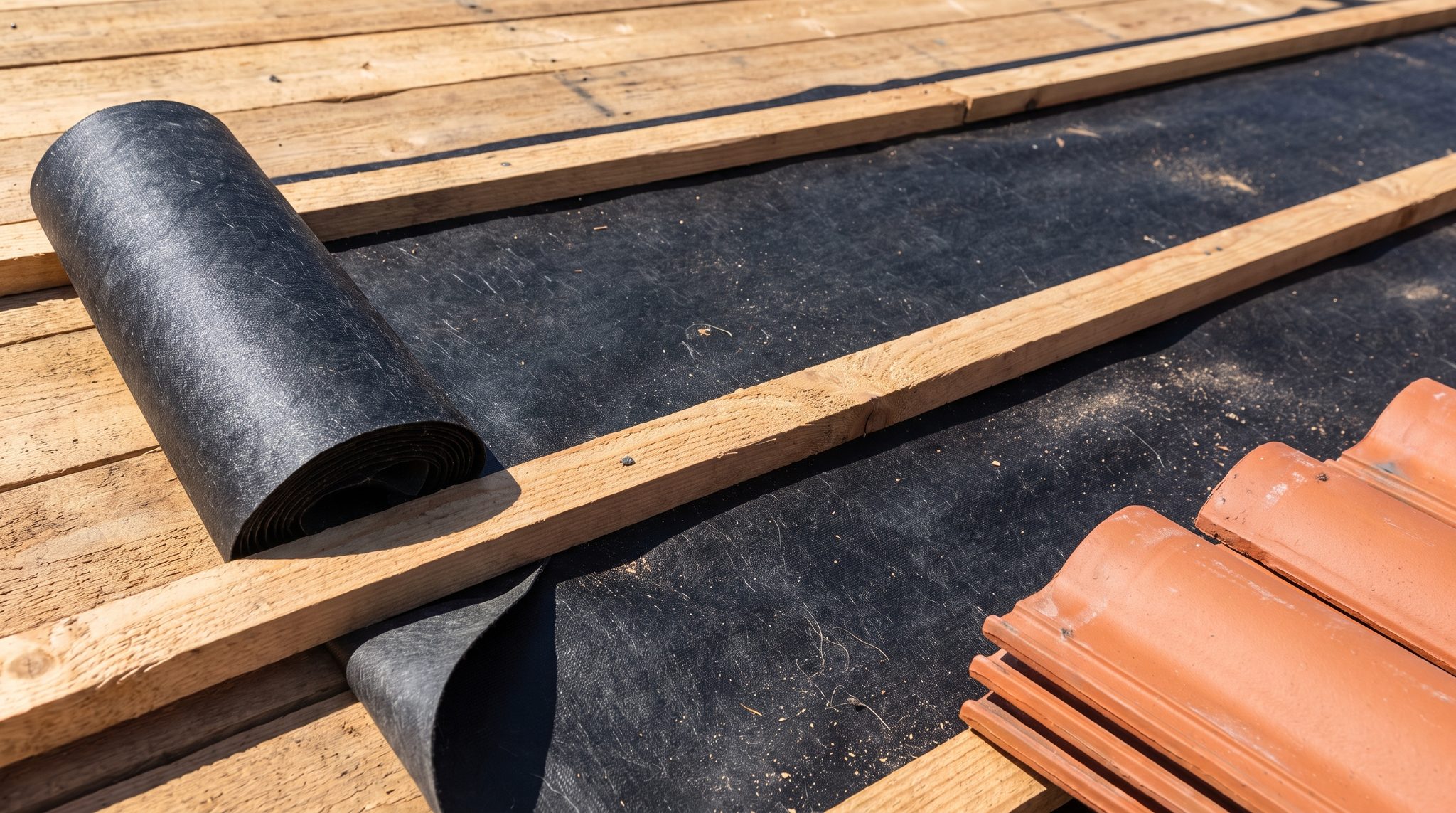
Underlayment spec is the whole point
The membrane we install under tile is not the same product that goes under shingles. Tile systems need a high-temperature self-adhered underlayment that tolerates the heat trapped under a tile field and stays stable for the life of the assembly, and in a High Velocity Hurricane Zone the whole assembly has to carry a current Notice of Acceptance.
Details matter more here than anywhere else on the roof: valley metal with the correct width and hem, eave and rake metal set before the membrane laps over it, headwall and sidewall flashing lapped in the right sequence, and pipe penetrations flashed rather than caulked. A tile re-roof done with the right membrane and the wrong flashings will still leak.
Attachment, code and the schedule you should expect
Tile is set in mortar, adhered with approved foam, or mechanically fastened, and the choice is dictated by the NOA for the system, the slope, and the design wind loads for the address. We install to the schedule in that approval rather than to habit, and we do not mix attachment methods across a single field.
Tile re-roofs run longer than shingle jobs — there is more weight to remove, staging to manage, and inspections at dry-in and final. Loading tile onto the roof puts significant weight in staged piles, so we distribute across the structure. Expect equipment access on at least one side of the house and a driveway committed to material for part of the job.
Deciding between repair and replacement
If leaks are appearing in multiple, unrelated locations, or the underlayment is visibly brittle wherever tile is lifted, the membrane has aged out and spot work stops being economical. If it is one valley or one slope, it is not a re-roof.
A documented roof evaluation with tile lifted in sample areas is the way to tell those two situations apart before committing to the larger scope.