
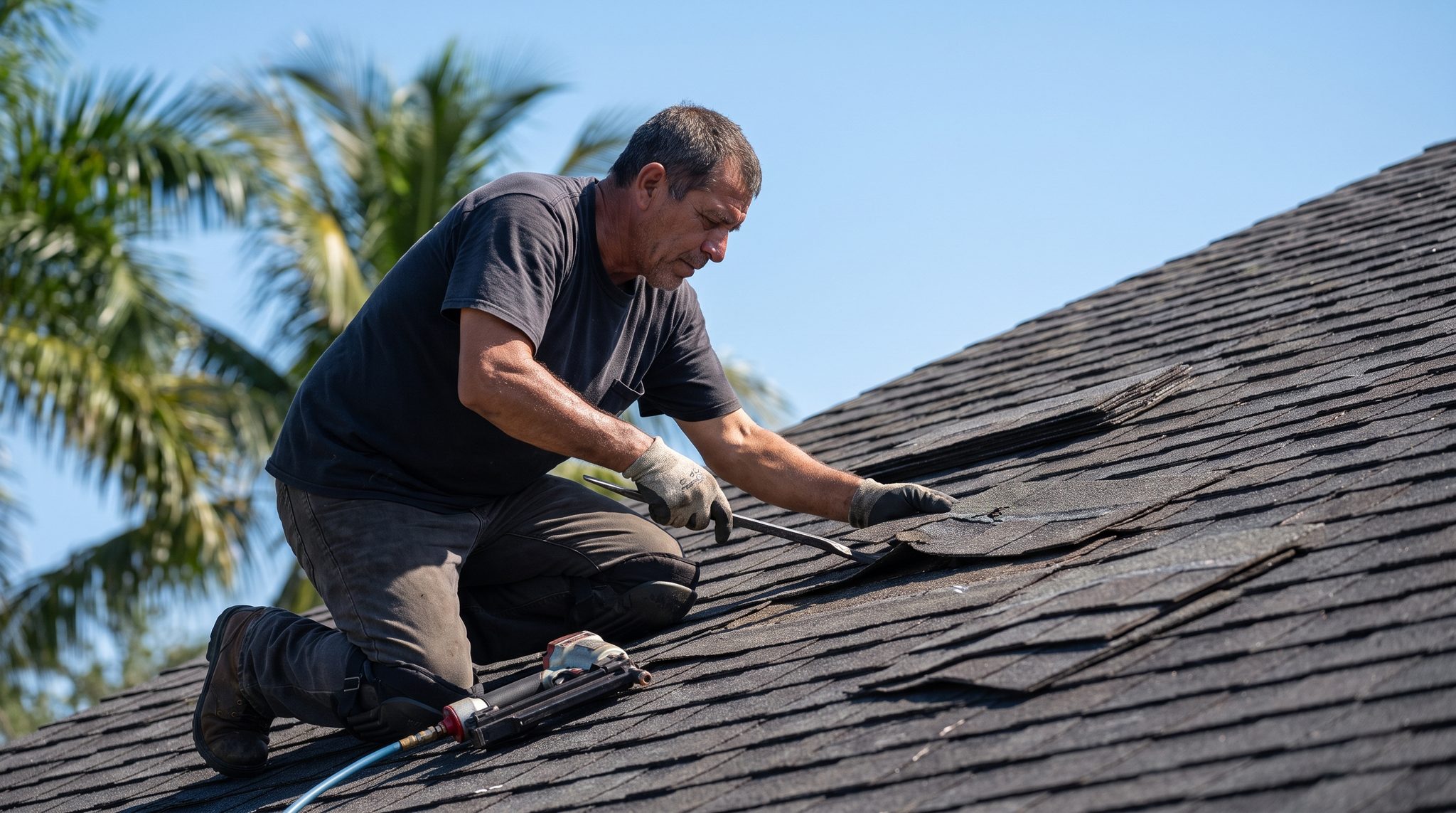
Shingle roof repair in South Florida is rarely just about the shingle. Between summer uplift, wind-driven rain and the UV load this latitude puts on asphalt, most leaks trace back to fasteners, flashing or an underlayment that gave up before the surface did. We open up the failure, find where water is actually entering, and rebuild that section properly instead of smearing mastic over it.
How we diagnose the leak on a shingle slope
Water almost never enters where it shows up inside. On a shingle slope it usually tracks down the deck from a nail pop, a lifted tab, a valley that has lost its metal, or a pipe boot whose rubber collar has cracked in the sun. We start at the interior stain, work back up the framing, then confirm from the roof side before anything gets torn open.
Once the entry point is identified we check the surrounding field. A single wind-lifted course usually means the sealant strip along that run has lost its bond, and repairing only the visible tab leaves the next storm an open edge to grab. We pull enough courses back to reach sound, fully sealed shingles before rebuilding.
Repairs built for hurricane season, not just for today
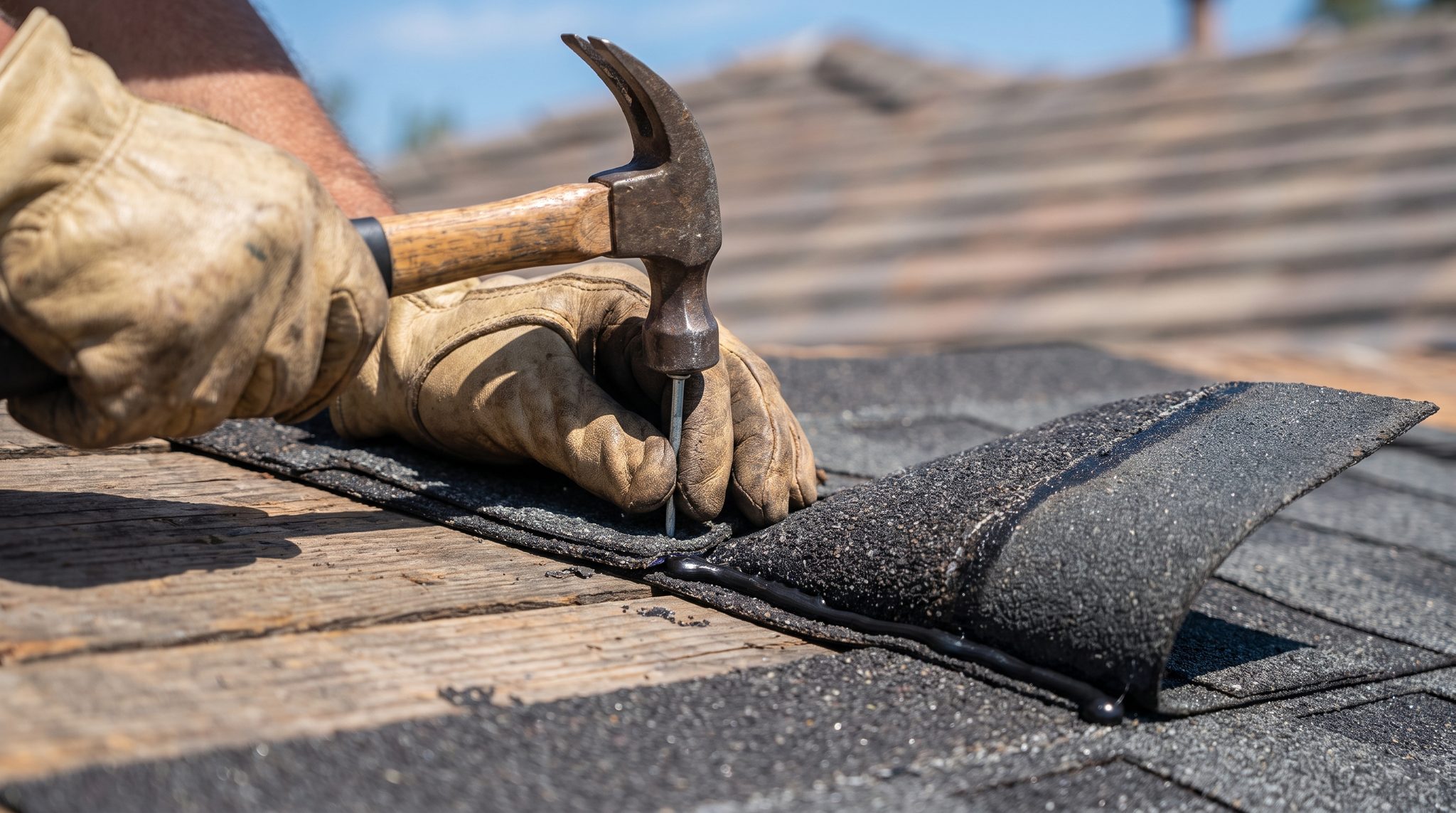
Every fastener pattern, drip edge and flashing detail we install on a repair follows current Florida Building Code for the county the home sits in. Miami-Dade and Broward both enforce High Velocity Hurricane Zone requirements, which means NOA-approved products and specific nailing — six nails per shingle rather than four, and self-adhered underlayment behind the patch.
We use peel-and-stick underlayment on repair areas rather than felt. Salt air and heat break down organic felt fast down here, and self-adhered membrane seals around the shank of each nail, which is exactly the detail that keeps a repaired section watertight when a band of a tropical system parks over the neighborhood.
When repair stops making sense
There is a point where patching becomes a way of spending money slowly. If granule loss is uniform across every slope, if the deck feels spongy underfoot, or if we are opening a third separate leak in the same season, the underlayment is at the end of its service life and repairs are only buying weeks.
We will tell you when that line has been crossed. If a full shingle re-roof is the honest recommendation we say so, show you the photos that support it, and let you decide. Homeowners planning to file with their insurer usually want a documented condition report first — we photograph everything we open.
Insurance and wind mitigation
If storm damage caused the failure, documentation matters more than speed. We photograph the damage before and after, note the date and the weather event, and provide a written scope of the repair so it lines up with what an adjuster expects to see.
Repairs that upgrade fastening or add a secondary water barrier can also affect a wind mitigation inspection. If you are due for a re-inspection, tell us before we start — some details are worth doing to the higher standard while the section is already open.