
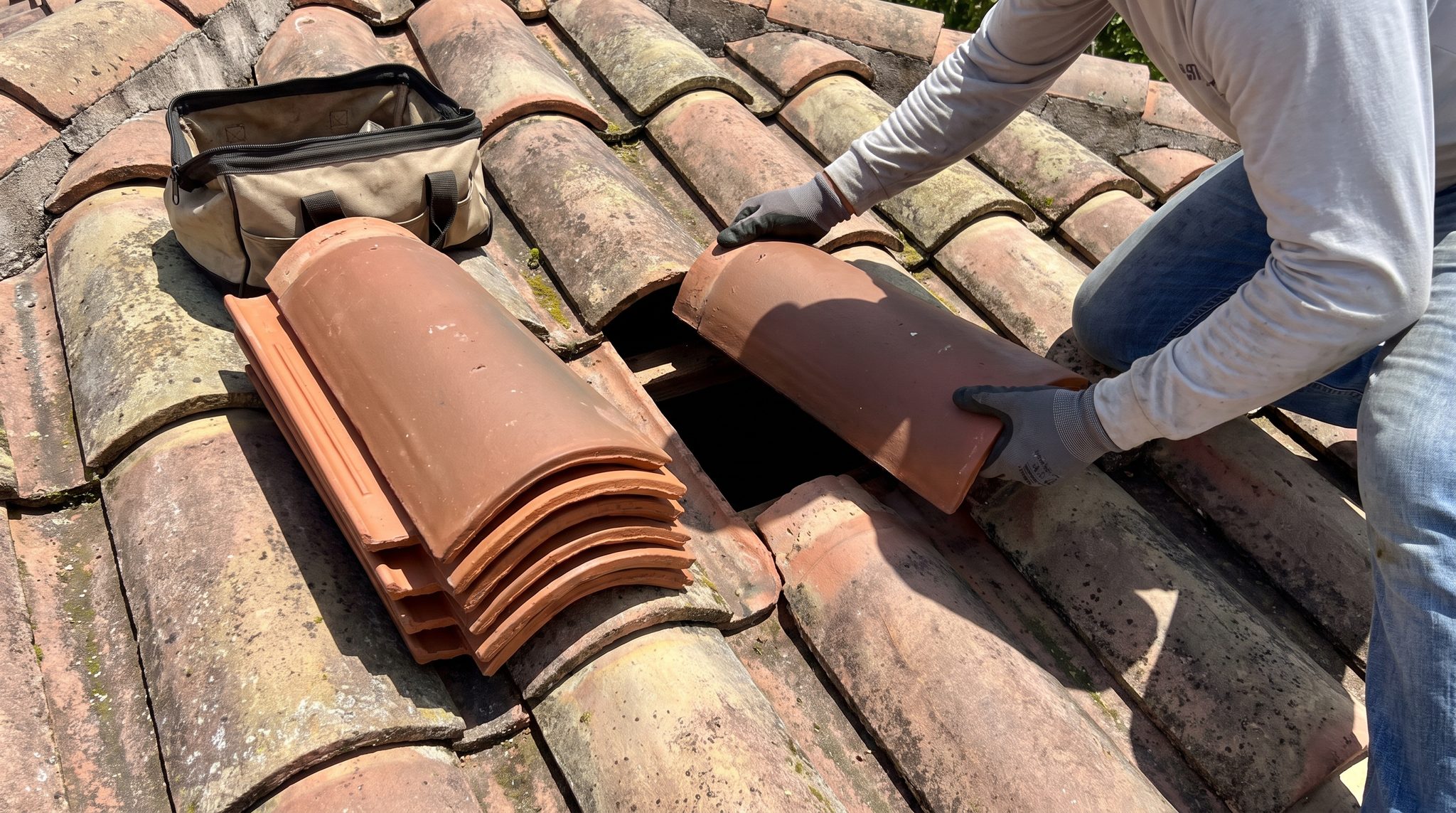
Roof tile replacement covers everything from swapping a handful of tiles cracked by a falling branch to re-tiling entire slopes where the profile has been discontinued and previous patch jobs left a checkerboard. The tile is your roof's armor against wind-borne debris — missing or slipped pieces expose the underlayment directly to sun and rain.
Why tiles break and slip down here
Debris impact during storms, foot traffic from other trades — satellite installers and A/C techs are frequent offenders — and simple age-related spalling on older concrete tile. Slipped tiles usually mean the original attachment has let go: mortar that has crumbled, foam adhesive that has debonded, or a corroded fastener.
Either way the exposed area matters more than the missing tile. Underlayment is not designed for direct UV, and a bare patch will degrade fast in a South Florida summer, turning a tile problem into a leak. Replacement is worth doing promptly.
Matching the profile
South Florida has a deep and specific inventory of tile profiles — barrel and S-tile, flat concrete, and a range of discontinued lines from manufacturers who have since changed hands. We identify the profile and colour blend first and source a match from current production or salvage before we start pulling anything off.
When nothing matches, the professional approach is relocation: pull original tile from a rear slope or a section hidden from the street, use it on the visible elevation, and place the closest available new profile where nobody sees it. That is how you avoid a patched roof reading as patched from the curb.
Setting new tile to code
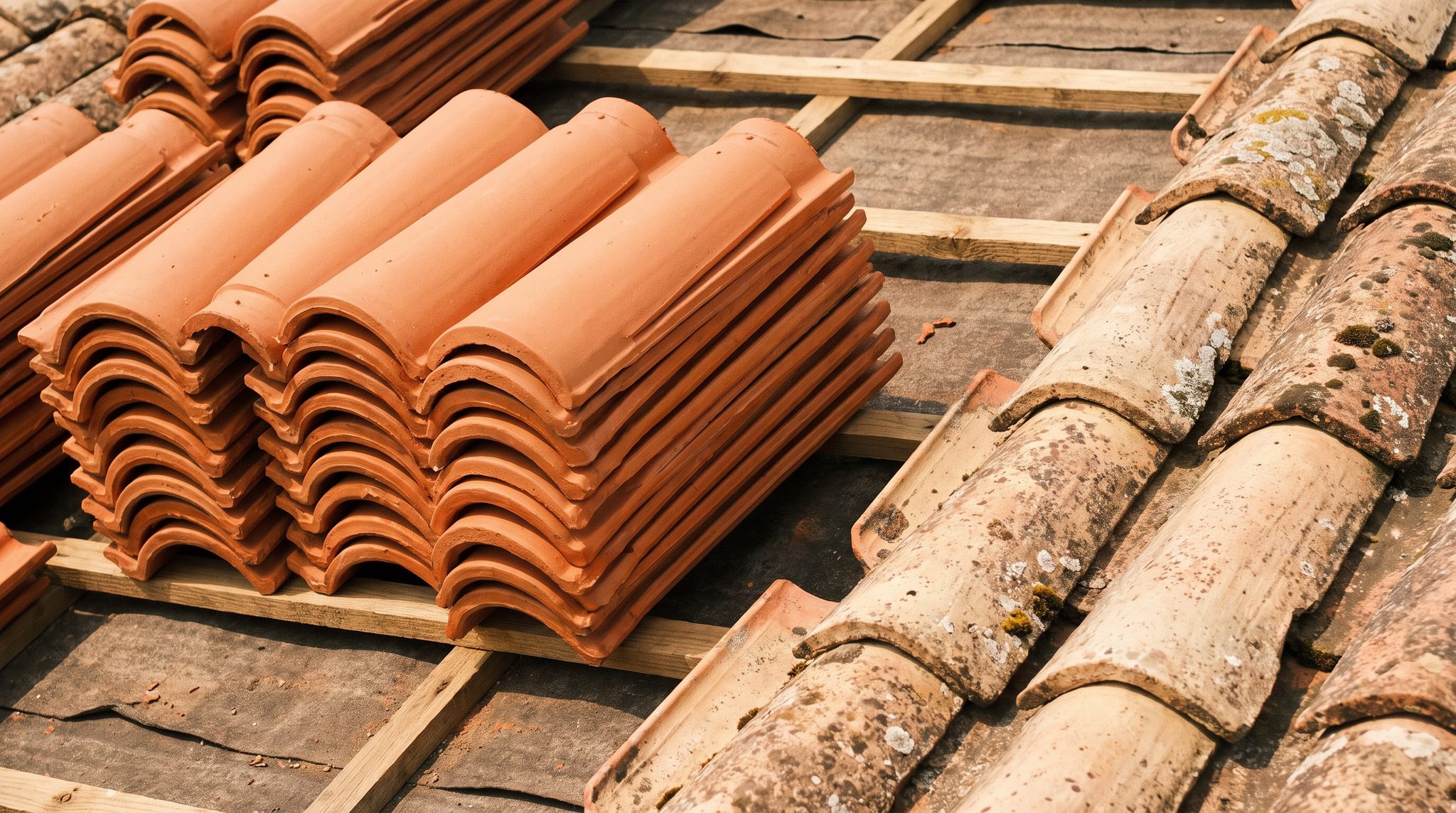
Attachment method matters as much as the tile. Depending on the existing system and the wind loads for the site, tile is set in mortar, adhered with approved foam, or mechanically fastened — and in Miami-Dade and Broward the assembly has to carry a current Notice of Acceptance and be installed to that NOA's schedule.
We match the replacement attachment to the surrounding system rather than mixing methods on one slope. Mixed attachment across a field creates inconsistent uplift resistance, which is exactly the weakness a hurricane exploits.
Checking what is underneath while you are there
Whenever tile comes off we look at the membrane below it. If the underlayment is brittle, cracked or torn around the fasteners, new tile over it is a cosmetic fix on a roof that will leak anyway — that is the point at which tile roof repair of the membrane, or a full tile re-roof, is the more honest recommendation.
If you are unsure which category your roof falls into, a documented roof evaluation answers it. We photograph what we find under the tile so the decision is based on the roof's actual condition, not on a guess made from the driveway.