
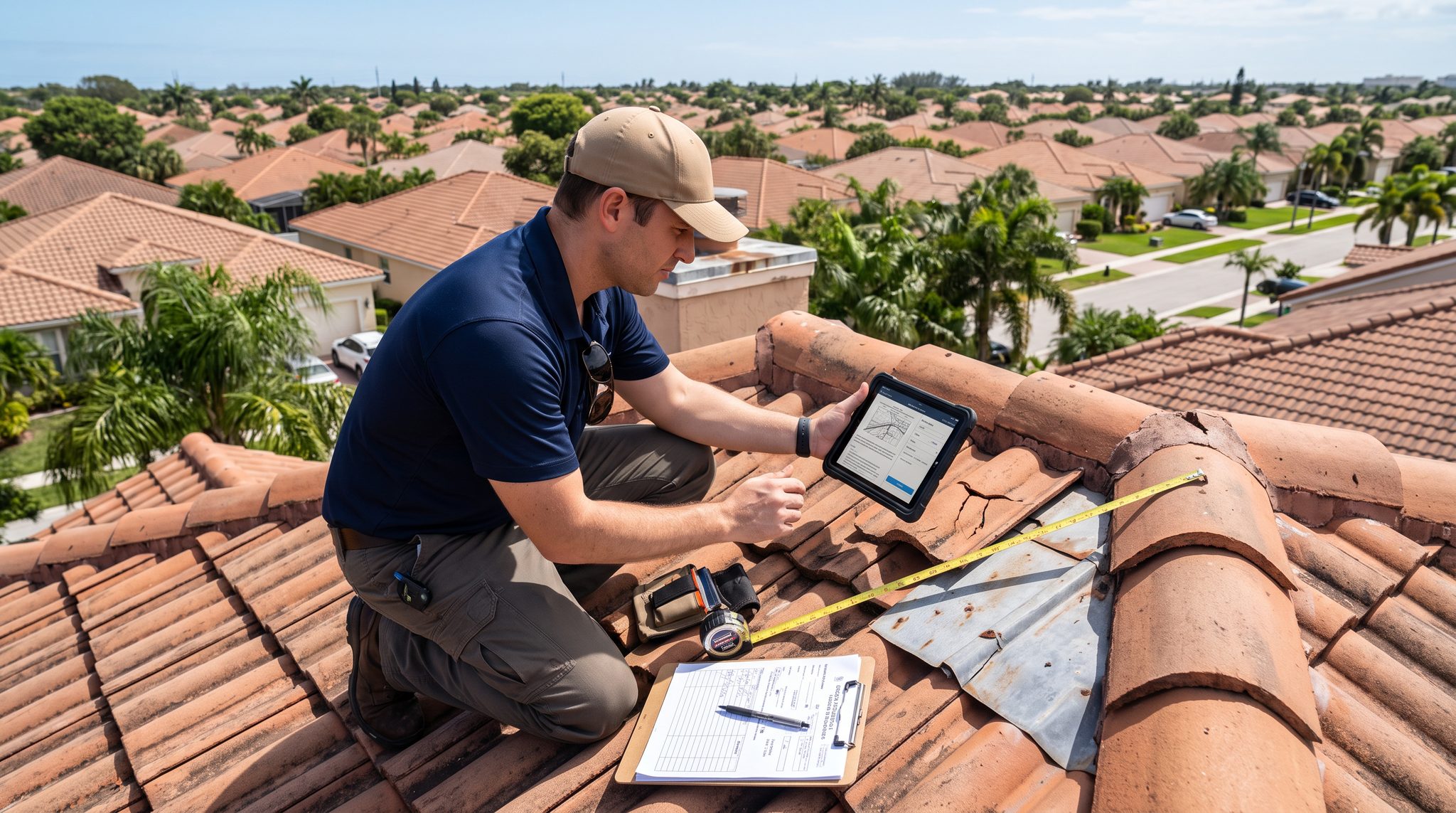
A roof evaluation is the step that should come before any other decision about your roof. It answers three questions with evidence rather than opinion: what condition the roof is genuinely in, what is causing any active problem, and whether repair or replacement is the appropriate response. Everything else we do — repairs, coatings, re-roofs — follows from it.
What a roof evaluation covers
We start on the ground and at the perimeter: drip edge and fascia condition, staining on soffits, gutter and downspout function, and any visible sagging in the roof plane. Then we get on the roof, walk it slope by slope, and assess the covering — granule loss and tab sealing on shingles, cracked or slipped units on tile, blisters, splits, open laps and ponding on low-slope areas.
The details get individual attention because that is where roofs fail: valleys, pipe boots, wall and headwall flashings, chimney and skylight curbs, drains and scuppers, ridge and hip closures, and every mechanical curb on a flat deck. Where safe access allows, we also look at the underside from the attic — daylight, staining, wet insulation and rusted fasteners tell you things the top side hides.
Tracing an active leak
If water is coming in, the evaluation becomes a diagnosis. Water travels along the deck and down framing before it appears on a ceiling, so we work backward from the interior stain to the likely entry point, then confirm from above. Where the source is genuinely unclear, controlled water testing on suspect details isolates it.
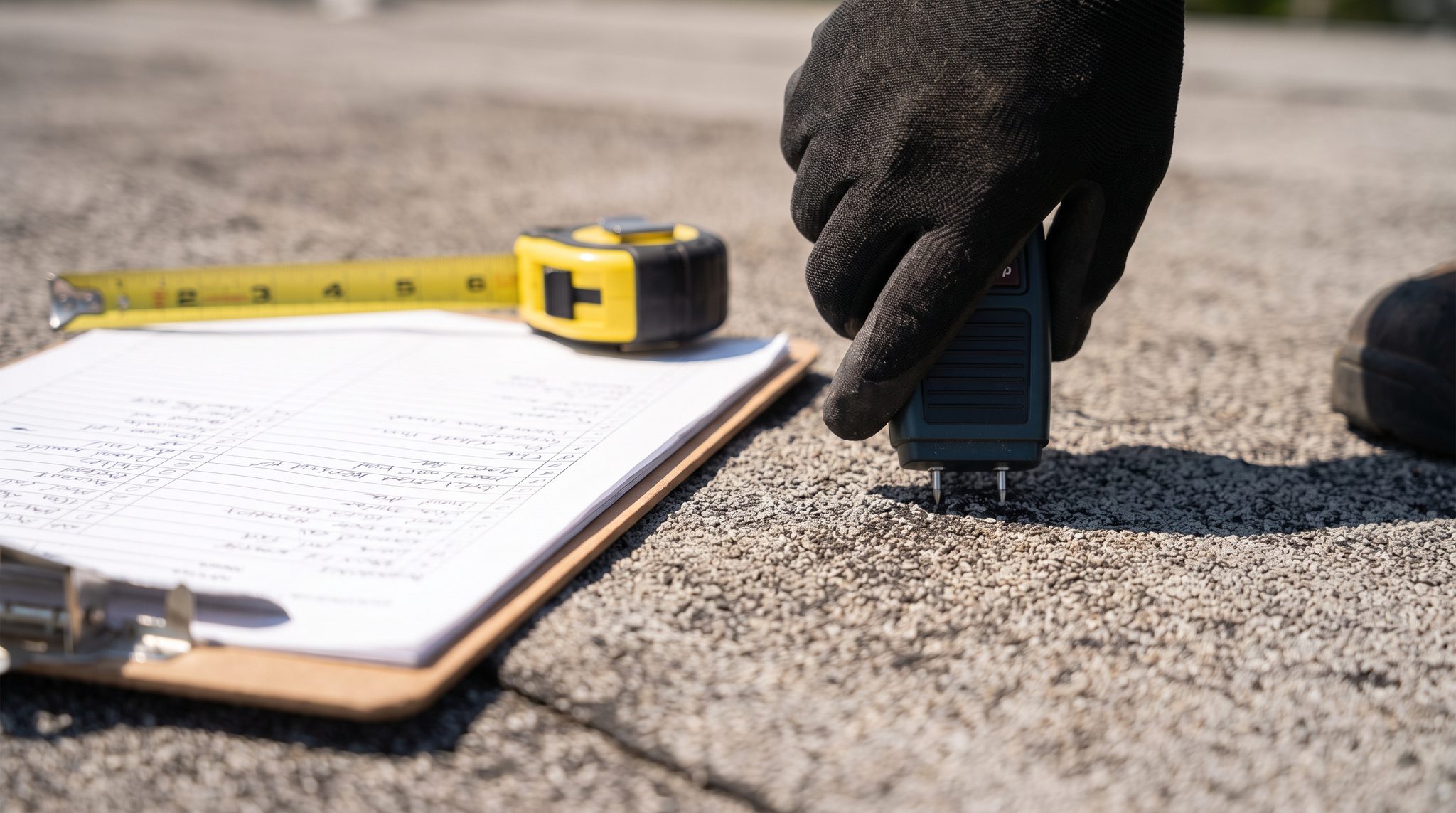
On tile roofs that often means lifting tile in sample areas to look at the underlayment directly, and on low-slope roofs it can mean probing for saturated insulation. Neither is guesswork, and both get photographed so you can see what we saw.
What you receive
A written condition report with dated photographs of what we documented: the covering by slope, each flashing and penetration detail, drainage, and any deficiency we found. Findings are described plainly — what it is, where it is, what it is likely to cause if left alone.
The report separates issues into what needs attention now, what should be monitored, and what is simply normal wear for the roof's age. Where repair is appropriate we scope it; where the roof has aged out we say that too, and explain which evidence led us there. You keep the report whether or not you hire us to do the work.
When to schedule one
After any named storm or significant wind event, whether or not you can see damage from the ground. Before buying or selling a South Florida home, because the roof is often the largest single item in the negotiation. Before renewing insurance or when a carrier requests documentation on roof condition. And any time you see an interior stain, however small.
It is also the right first step when you have received conflicting advice. If one contractor says repair and another says full replacement, a documented evaluation gives you the photographs to judge for yourself.
Where the evaluation leads
Most evaluations end in one of a handful of places. Isolated damage on a pitched roof points to shingle roof repair or tile roof repair. Broken or slipped units with sound membrane below point to roof tile replacement. Localised low-slope failures point to flat roof repair, and an aging but intact low-slope membrane may be a candidate for flat roof coating.
Where the underlayment or membrane has aged out across the roof, the answer is a full replacement — a shingle re-roof, a tile re-roof, or a flat re-roof depending on the system. Rot at the roof edge is fascia repair and replacement work, and failed curbs or domes are skylight installation work. Whichever it is, the recommendation comes with the photographs behind it.