
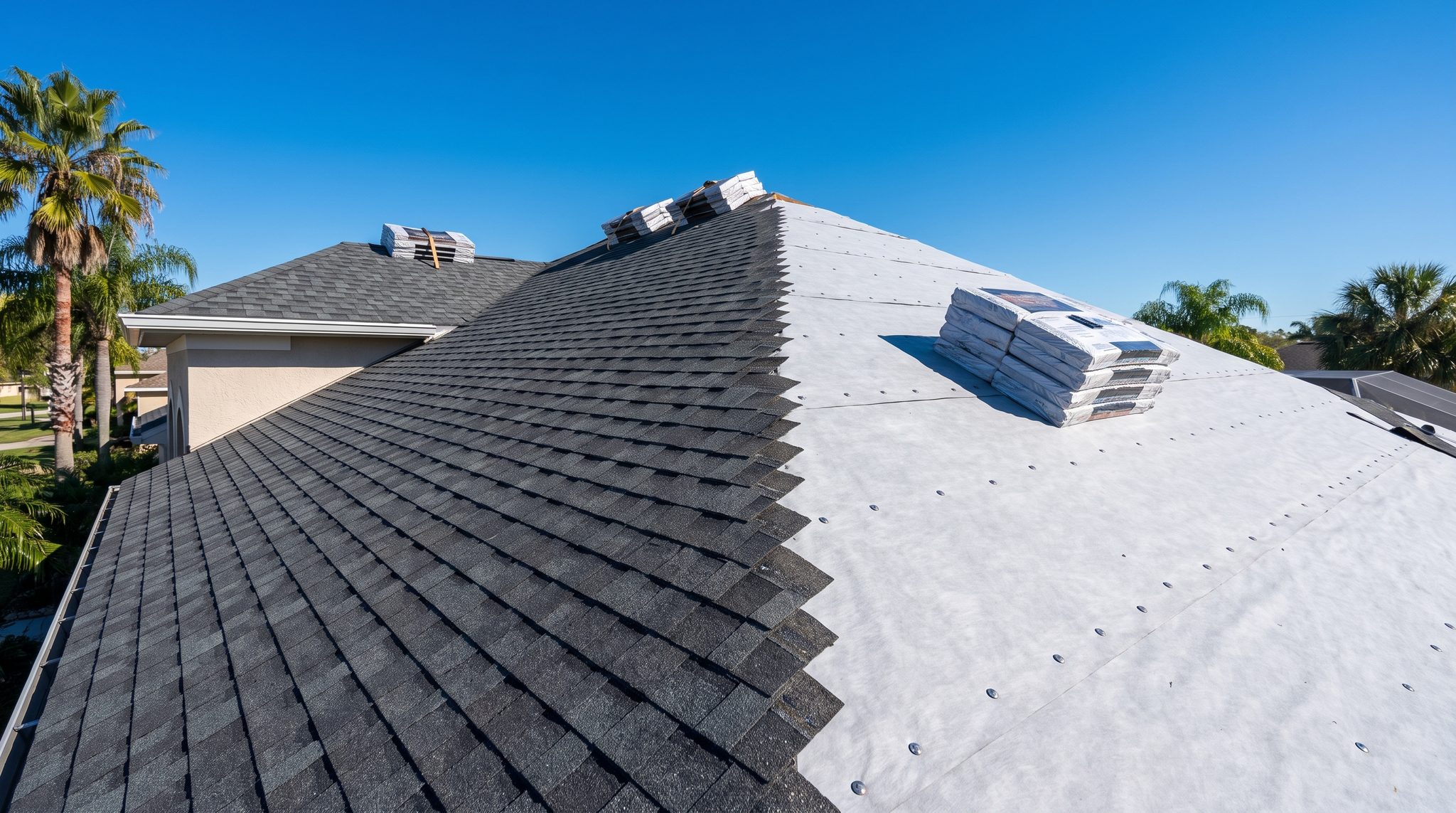
A shingle re-roof is a full system replacement, not a resurfacing. Everything above the plywood comes off, the deck gets inspected and re-nailed to current code, a new secondary water barrier goes down, and the roof is rebuilt from the drip edge up. On a South Florida house that whole assembly — not the shingle colour — is what decides how the roof behaves in a named storm.
Tear-off scope: what actually comes off
We strip to bare deck. Old shingles, old felt or membrane, old drip edge, old pipe boots and old valley metal all leave the property. Florida has largely closed the door on layering new shingles over old on residential work, and for good reason: a second layer hides deck rot, doubles the dead load, and prevents any inspection of the sheathing you are about to trust for the next couple of decades.
Tear-off happens slope by slope so the house is never left broadly open. Anything we expose in the afternoon is dried in before the crew leaves, which matters between June and November when a squall can build in under an hour.
The deck is the part nobody sees
With the shingles gone we walk the plywood looking for delamination, soft spots around penetrations, and sheathing that has separated from the trusses. Damaged panels get replaced with matching-thickness plywood, and the entire deck is re-nailed to the current fastening schedule — an 8d ring-shank pattern rather than whatever staple gun built the house in the 1980s.
Re-nailing is not optional paperwork. It is the single upgrade that most changes how the roof deck resists uplift, and on an existing home it is usually a permit requirement at re-roof. It also shows up on a wind mitigation form, which is the form your insurer reads.
Underlayment and the shingle system itself
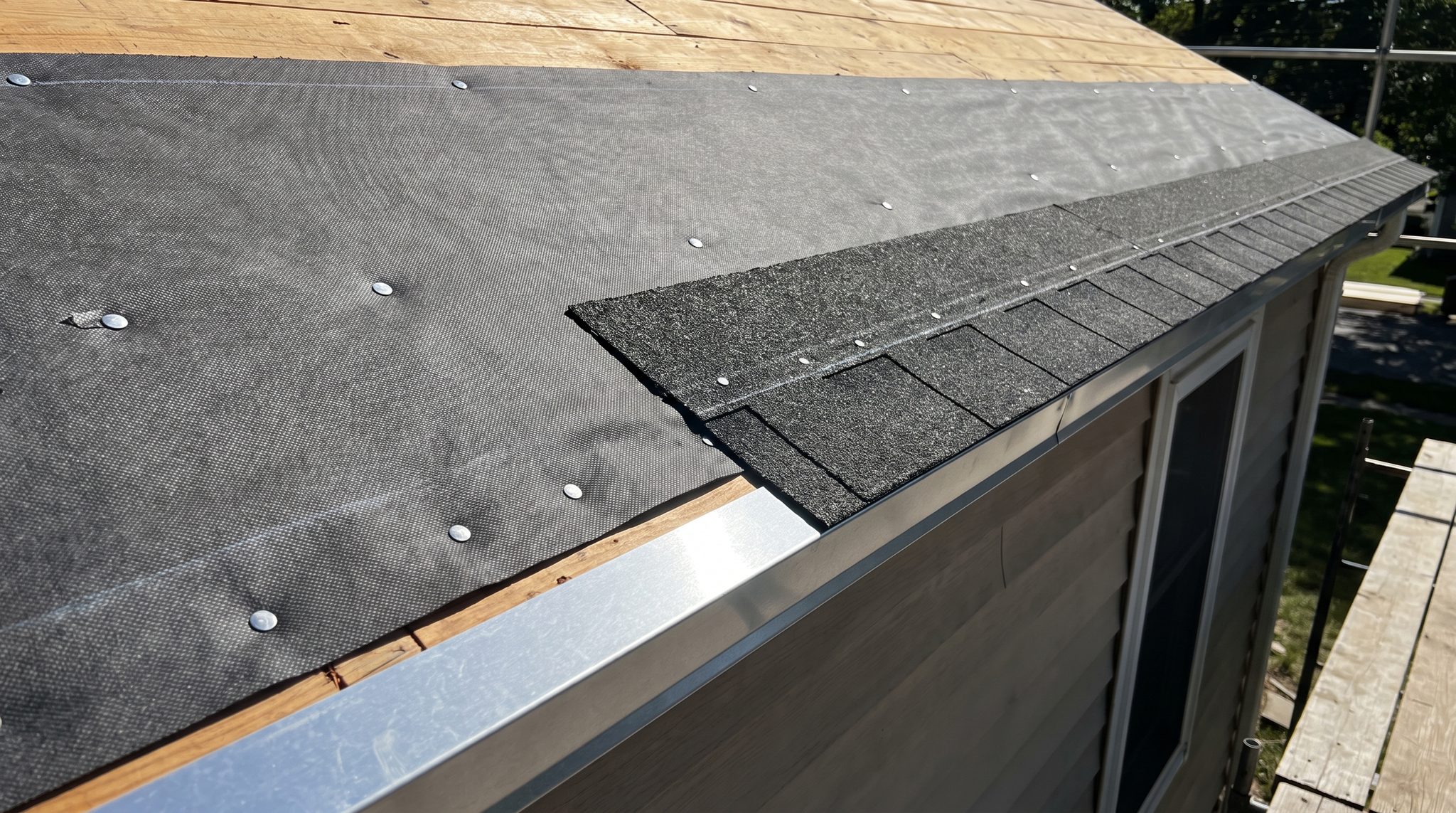
We specify self-adhered underlayment rather than mechanically-fastened felt. Peel-and-stick membrane bonds to the deck and seals around each nail shank, so if wind takes shingles off in a storm the house underneath still sheds water. That is the difference between a damaged roof and a flooded ceiling.
Above it goes an architectural shingle rated for the site's design wind speed, with the manufacturer's high-wind nailing pattern, a starter course sealed at the eaves and rakes, new metal drip edge, new valley metal, and new boots on every penetration. Mixing a new shingle over old accessories is the most common corner cut in this trade and the fastest route back to a leak.
Permits, inspections and what happens on site
A shingle re-roof is permitted work in every municipality we serve. Expect a dry-in inspection after the underlayment goes down and a final inspection after completion, and expect the roof to sit dried-in between the two. We pull the permit, meet the inspector, and hand over the closed-out documentation at the end.
On site, plan for a dumpster or dump trailer in the driveway, magnetic sweeps of the yard daily, and noise — tear-off is loud. Move wall-hung items in the garage, and if the attic is used for storage, cover it: debris comes through the sheathing gaps whether you expect it or not.
When a re-roof is the right call
Uniform granule loss across every slope, curling or cupping tabs, repeated leaks in different locations, or a roof that is simply old enough that its underlayment has hardened. If the failures are isolated, shingle roof repair is still the cheaper and more honest answer.
If you want the decision made on evidence rather than a sales pitch, start with a documented roof evaluation — photos of the deck, the flashings and the underlayment, and a written summary of the roof's condition.