
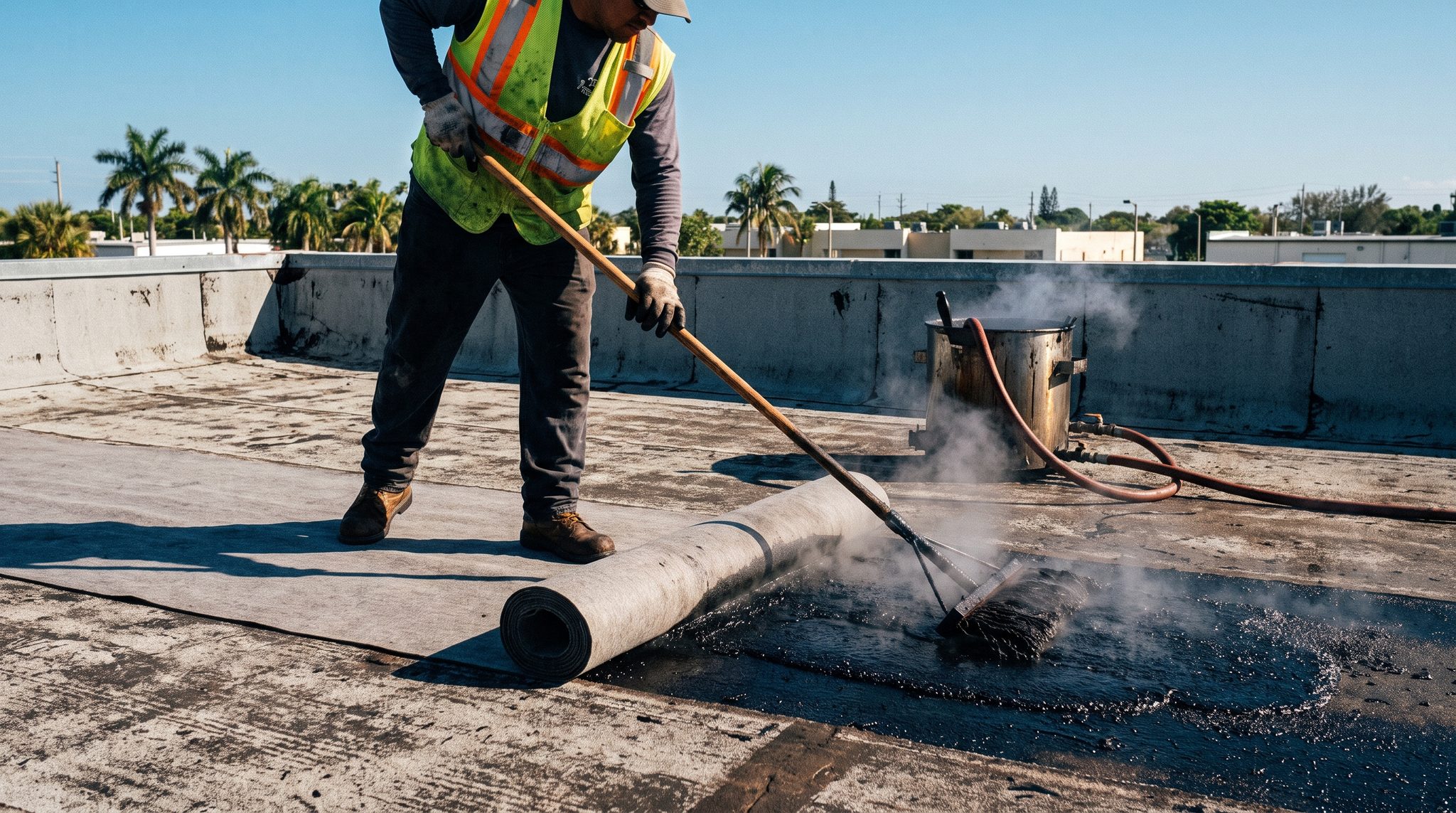
Hot mop roofing is the traditional built-up method: layers of reinforcing felt or ply sheet embedded in hot asphalt, mopped on one course at a time to form a single monolithic membrane. It predates every single-ply product on the market and it is still specified on South Florida low-slope decks and under tile, because a multi-ply asphalt system does some things nothing else does as well.
What a hot mop roof actually is
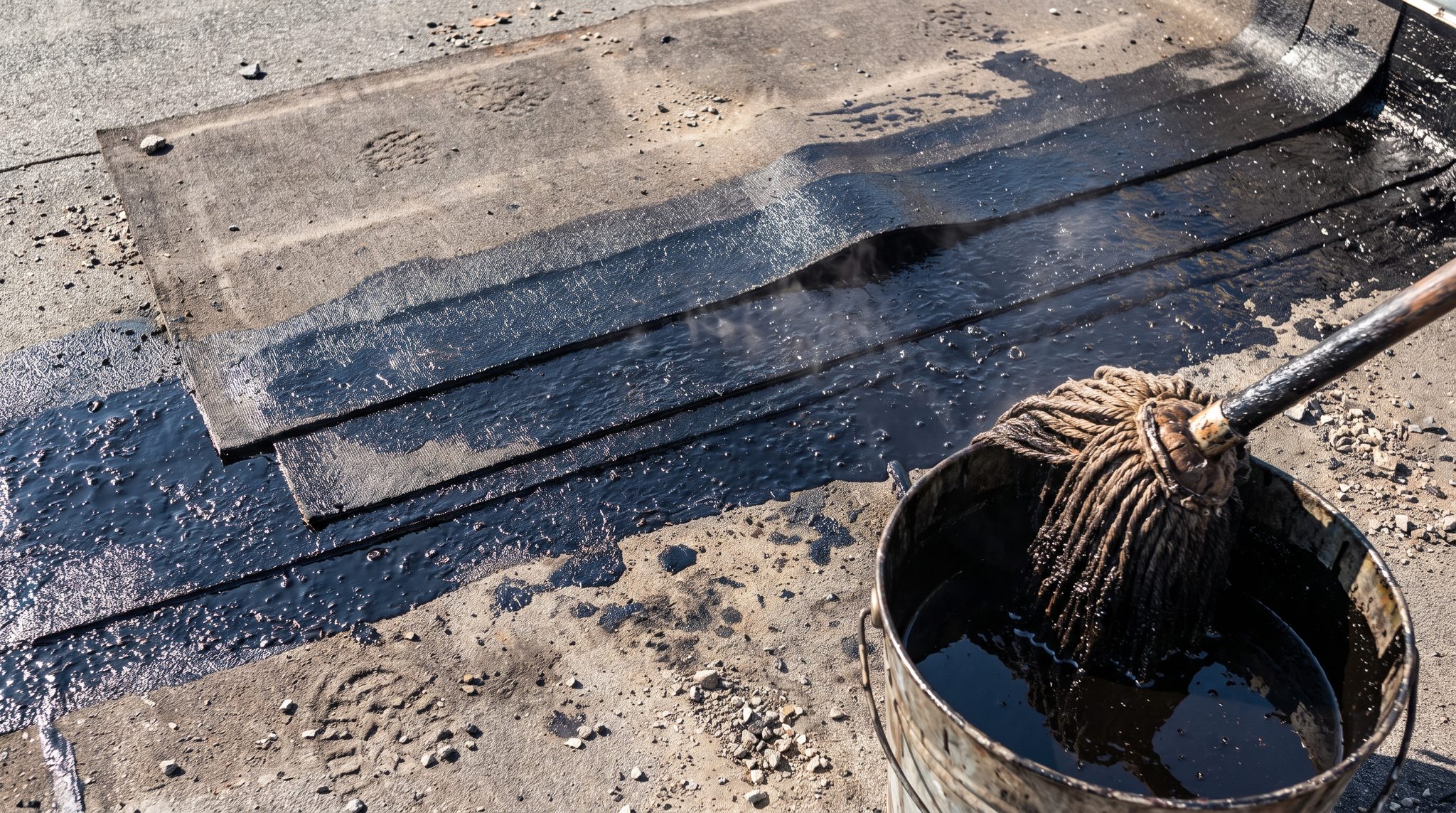
Asphalt is heated in a kettle to its application temperature and carried to the deck, where it is spread with a mop or mechanical spreader. A ply sheet is rolled into the hot asphalt immediately so the two bond, and the process repeats — typically two, three or four plies depending on the specification — with each layer offset so the seams never stack.
The result is not a sheet laid on a roof; it is a membrane built in place, with redundancy through its thickness. A puncture through one ply does not open a path through the assembly. On systems finished with a cap sheet or gravel surfacing, the top layer takes the UV load and the plies underneath do the waterproofing.
Where hot mop roofing is still the right call
Tile roofs are the biggest one. The two-ply hot-mopped base under a tile field has a long track record in this region, and it tolerates the heat and foot traffic that come with setting tile on top of it far better than lighter membranes. Where a tile system's approval calls for a hot-mopped base, that is what gets installed.
It also suits low-slope roofs with heavy traffic, complex penetration-dense decks where a fluid, conformable membrane beats sheet goods, and tie-ins where a new low-slope area meets an existing asphalt system. If you are already replacing a built-up roof and want continuity of material, hot mop is the like-for-like answer.
Hot mop versus single-ply and torch-down
Single-ply TPO or PVC wins on reflectivity, installation speed and cool-roof performance on large open commercial fields, and its heat-welded seams are easy to inspect. It is lighter, cleaner to install, and generally the better economic choice on a big, simple roof. Where reflectivity and speed dominate the decision, a flat re-roof in single-ply is usually what we recommend.
Torch-down modified bitumen sits in between: multi-ply asphalt performance, no kettle, but an open flame on the roof — which some buildings, insurers and HOAs simply will not permit. Hot mop avoids the torch but brings a kettle, fumes and odour instead. Neither is universally better; the deck, the building's occupancy and the local rules decide.
Honest limitation: hot mop is labour-intensive, weather-sensitive, and its dark surface absorbs heat unless it is surfaced with a reflective cap or coating. On an unoccupied simple deck in full sun, single-ply is often the smarter specification, and we will say so.
What installation looks like on site
A kettle is set up at ground level, usually in the driveway or a staging area, with a safe route to the roof. Asphalt is monitored at temperature, and the crew works in a continuous rhythm because the bond depends on the ply going into asphalt that is still hot. That is why hot mop work does not start when rain is imminent and stops well before it arrives.
There is odour. Asphalt fumes are the main reason building owners ask about alternatives, and on occupied buildings we plan kettle placement and air-intake locations around it. Debris and drips are contained on protective sheeting; the driveway area under the kettle is protected before anything is heated.
Maintenance and what comes next
Built-up roofs age at their surfacing first. Keeping a reflective cap or coating intact extends the membrane below it considerably, which is why a flat roof coating is a sensible mid-life step on a hot-mopped roof rather than a repair of last resort.
Localised blisters, splits or open laps are ordinary flat roof repair work and are repaired in kind. If you are not sure whether your existing roof is built-up, modified or single-ply, a roof evaluation will identify the system and its remaining service life.